To enhance students' global competence and broaden their international academic horizons, our school held the 2026 Frontier Lecture Hall of Electrical Engineering and Control (Session 2) & Summer International Curriculum Week from July 13 to 26, 2026. The event invited 9 top global foreign experts to deliver cutting-edge lectures, whose research directions cover power electronics, motor drives, electromagnetic optimization, energy simulation, smart grid, intelligent control, rehabilitation robots, digital twin smart transportation and other fields. It attracted hundreds of teachers and students from majors including electrical engineering, automation, transportation, and biomedical engineering across the whole university to participate. The courses integrate theoretical explanations, engineering cases, online and offline Q&A and group discussions, creating a strong atmosphere for on-site academic exchanges.
Centered on special lectures by overseas experts, the event adopts teaching forms such as case analysis, real-time Q&A and group seminars. It systematically sorts out the theoretical framework of various disciplines, combines cutting-edge scientific research achievements, industrial examples and simulation schemes, and takes into account both theoretical depth and engineering value. The visiting experts include IEEE Fellows, editors-in-chief of top international journals and heads of leading laboratories. The course content is divided into four major professional sections for sequential sharing.
1. Frontier Section of Power Electronics Technology and New Energy Systems
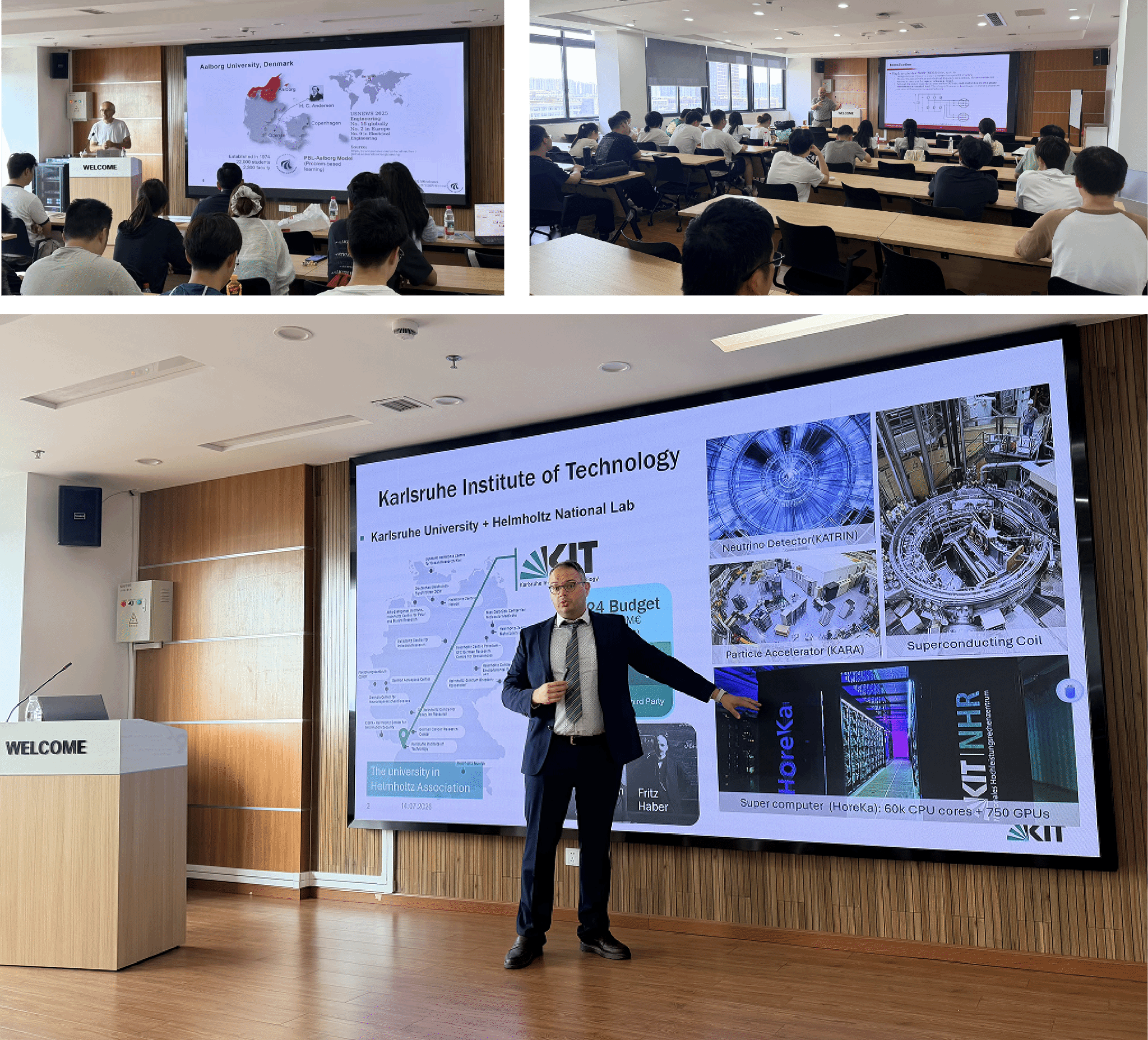
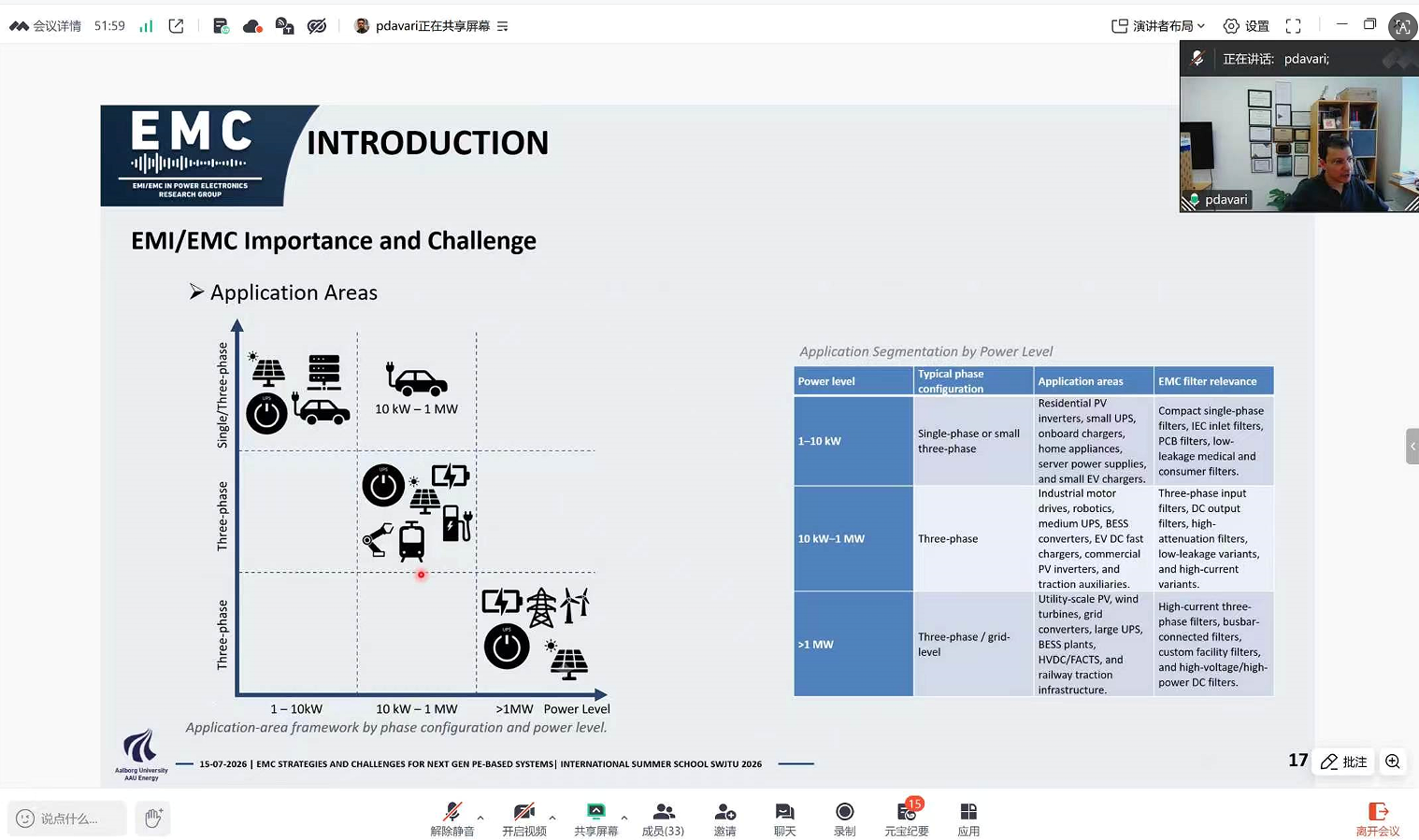
This section brings together four top international power electronics experts, delivering lectures covering the full spectrum of industry development trends, semi-physical simulation, electromagnetic compatibility, and intelligent control of converters. Prof. Frede Blaabjerg from Aalborg University, Denmark, analyzes the opportunities and technical challenges of power electronics in the new energy and transportation sectors under the electrification transformation. Prof. Giovanni De Carne from Karlsruhe Institute of Technology, Germany, explains the principle of power hardware-in-the-loop simulation and provides standardized testing schemes for energy storage and hydrogen energy equipment. Prof. Paolo Mattavelli from the University of Padova, Italy, introduces the intelligent stability control technology for converters in high-penetration new energy power grids, combined with cases of wind power and microgrids. Prof. Pooya Davari from Aalborg University delivers online lectures, systematically explaining complete EMC solutions such as EMI modeling and filter design targeting the electromagnetic interference issues of wide-bandgap devices.
2. Motor Drive and Electromagnetic Design Optimization Section
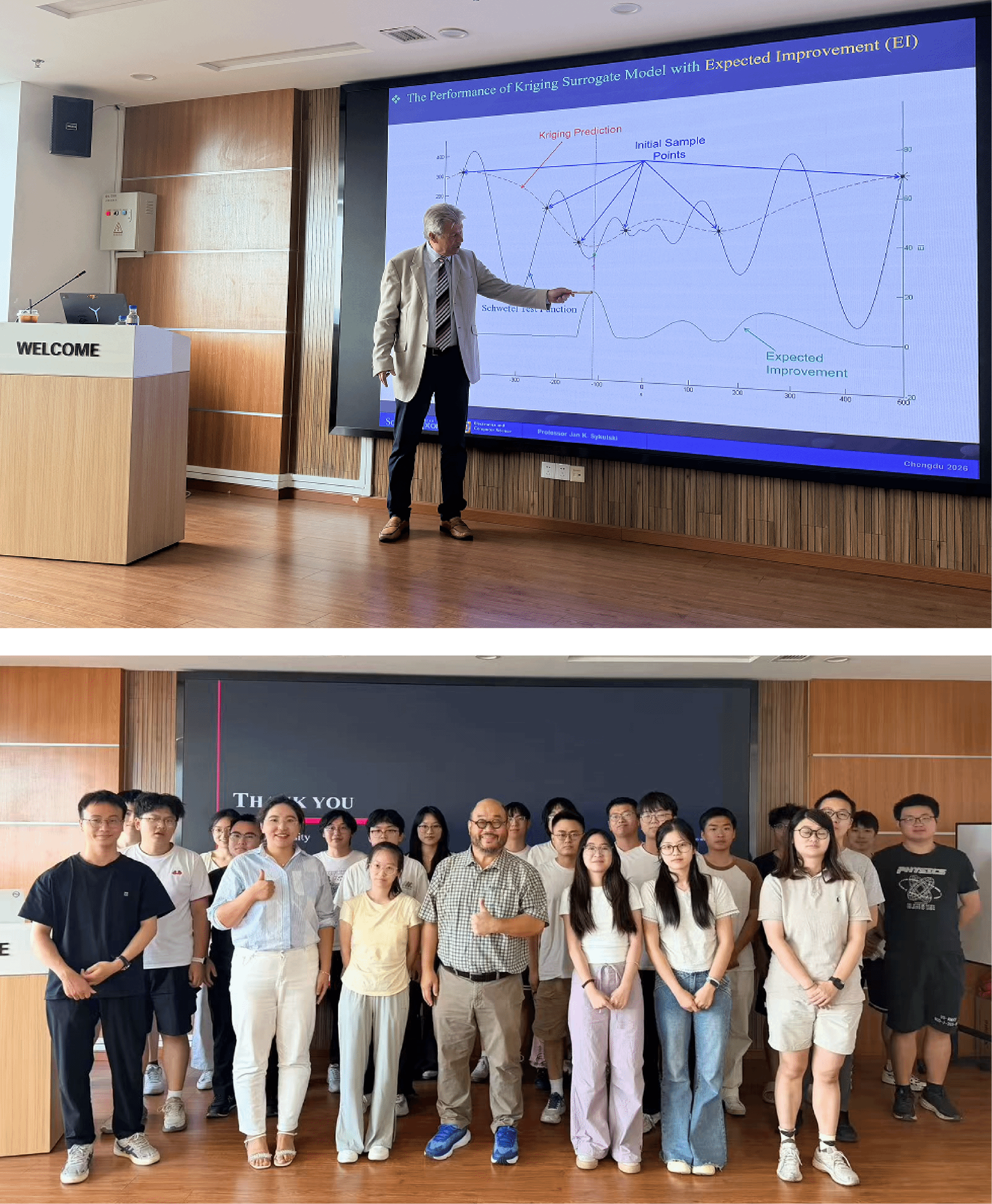
Prof. Jan Sykulski from the University of Southampton, UK, delivered a special report on electromagnetic design optimization. He introduced the hierarchical design idea and core algorithms including Kriging model and Pareto optimization, predicted the industry development trend combined with deep learning, cloud computing and other technologies, and demonstrated the actual effect of the optimization scheme through electromechanical simulation cases. Prof. Kyo-Beum Lee from Ajou University, South Korea, focused on new-type motor drive technologies. Targeting scenarios such as electric vehicles and industrial transmissions, he explained the topology principle, modulation and control methods of single-inverter dual-motor systems and open-winding motors, sorted out existing technical difficulties and cutting-edge research achievements, providing references for the R&D of high-performance drive systems.
3. Interdisciplinary Frontier Section of Intelligent Control
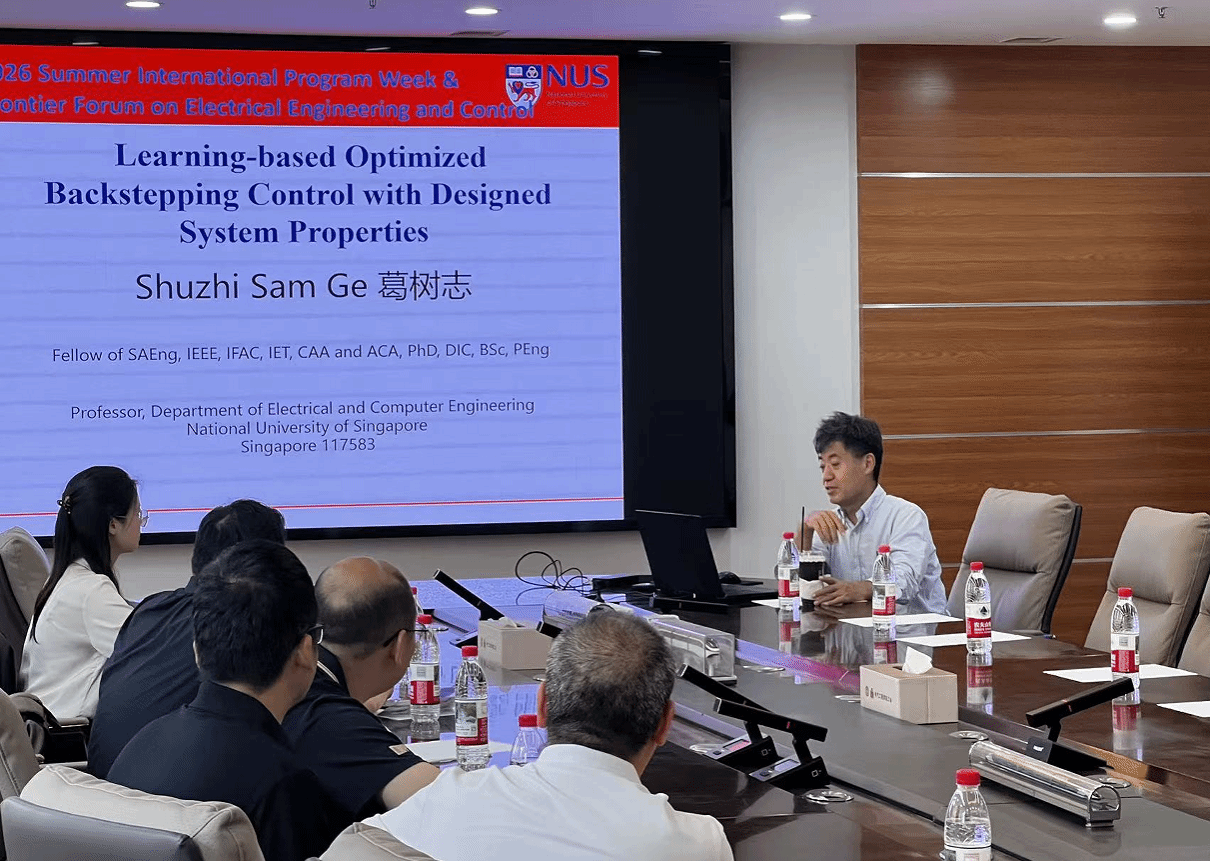
Prof. SHUZHI SAM GE from the National University of Singapore gave lectures on learning-based optimized backstepping control. Taking safety-constrained systems, time-synchronized convergence and adaptive neural network control as the core, he integrated barrier Lyapunov functions, reinforcement learning and time series modeling technologies, and proposed an intelligent control framework suitable for scenarios such as autonomous driving that balances safety and performance. Prof. Zhiqiang Zhang from the University of Leeds delivered online lectures via Tencent Meeting, focusing on computational biomechanics. He integrated mechanics, brain-computer interface and human-computer interaction technologies, calculated and measured human motion parameters through neuromusculoskeletal simulation, introduced the design of personalized rehabilitation robots, and expanded the interdisciplinary applications of electrical engineering and automation in the medical field.
4. Digital Twin Intelligent Transportation Optimization Section
Prof. Edward Chung from The Hong Kong Polytechnic University delivered the keynote lecture Digital Twin Technology Oriented to Traffic Signal Optimization. Aiming at the regulation challenges of high-dimensional complex systems in large-scale road networks, he integrated vehicle-road perception, reinforcement learning and surrogate model technologies to overcome the shortcomings of AI traffic control in interpretability and cross-scenario transferability. He constructed a human-machine hybrid intelligence-driven collaborative optimization system for urban road network signals, and demonstrated the complete implementation scheme of digital twin in the smart transportation field.
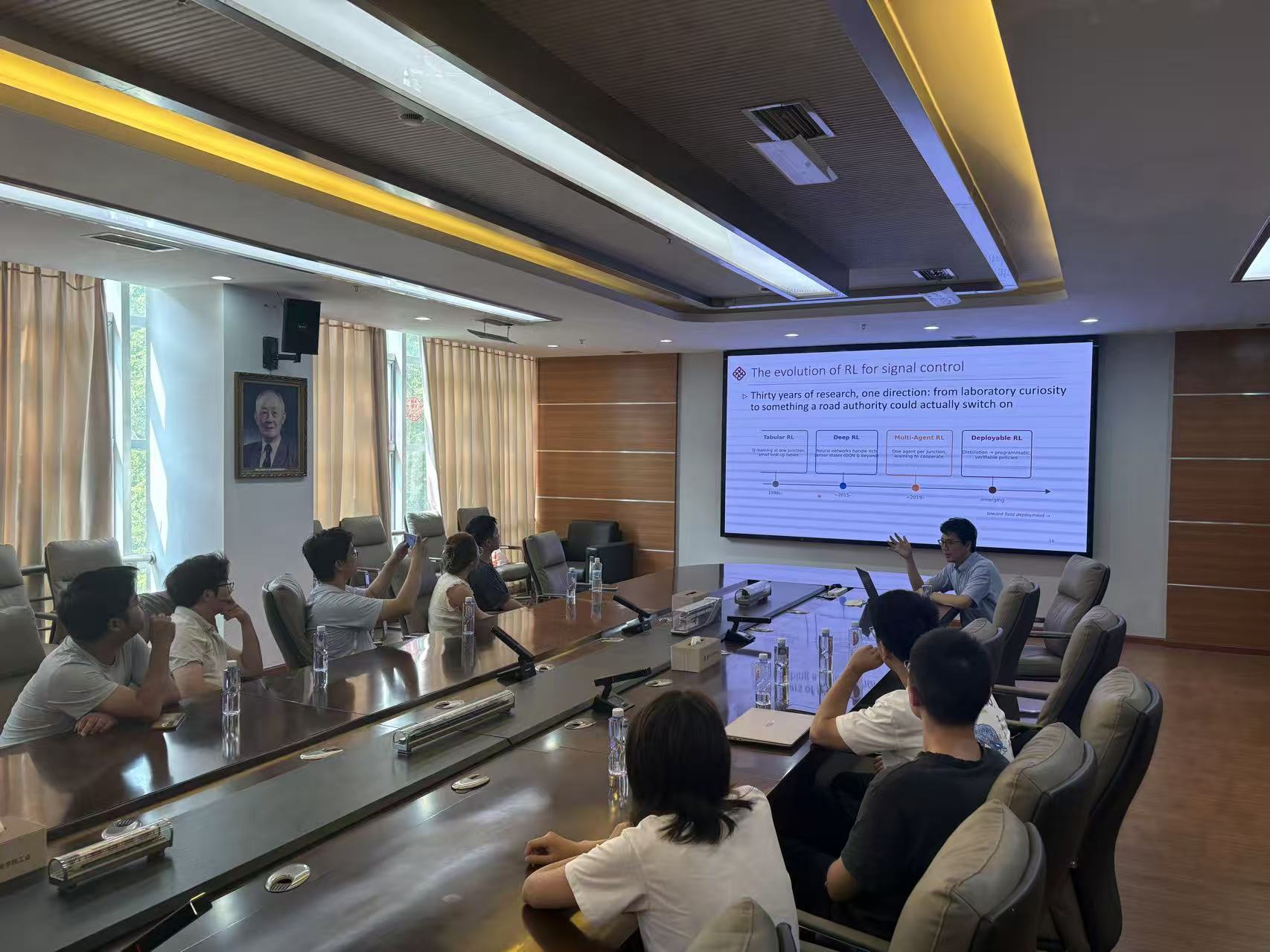
The participating teachers and students stated that the event built a high-level international exchange platform, broke the boundary between theory and engineering practice, helped them gain new ideas in directions including power electronics, electromagnetic compatibility, intelligent control and digital twin, and effectively broadened their international vision. Prof. Huang Deqing, the course coordinator and director of internationalization of the school, pointed out that this event gathered top international scholars from multiple fields, covered scenarios of energy, transportation and medical care, enriched the school's international teaching and research resources, and laid a foundation for international cooperation and joint training. In the follow-up, the school will regularly hold international courses and expert forums, improve the international talent training system, and cultivate interdisciplinary talents in electrical engineering and control with both global vision and professional competitiveness.